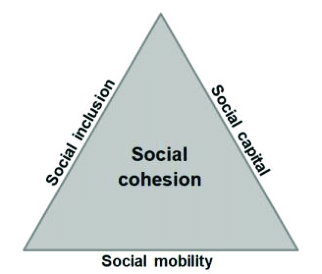
See the purpose here:
https://stephenamitchell.wordpress.com/2020/05/04/research-journal-the-first-step/
Today’s reading is a paper which you can find here: http://www.rela.ep.liu.se/article.asp?DOI=10.3384/rela.2000-7426.rela9111
It’s quite an interesting read, all around the impact of adult face-toface learning and online blended learning (OBL) on social capital and social inclusion. Firstly, I’m going to define these as my interpretation of them was slightly different than the authors:
social capital = participation and connectedness, generally, and not specific to an academic group or class
social inclusion = social relations – a deeper social capital (again, generally – as above)
As an OBL learner, I was particularly interested in this perspective and it goes without saying that the results were not as positive as those adult learners participating in face-to-face sessions. The biggest group to show a positive in OBL was what the author refers to as ‘non-native’ learners. From my previous reading, I’m sure that this is interconnected with a greater sense of belonging.
The paper did make me chuckle slightly, it noted that OBL courses showed a negative impact on social capital in adults… well, that’s mainly because we are all time short and need to ensure we spend it in the best way and often that is learning.
I did find the data sets quite challenging to interpret and it has put a little fear in me around understanding and developing complex methodology for data sets – however, it must be manageable to learn… and our next module is centered around the challenges that this presents and how to achieve it.
I was interested to note that the age didn’t represent a notable positive or negative across any of the environments; there were actually 0 55+ learners represented. Accessibility of OBL would strike me as an issue here. I would want to ask a question around this if I could.
I’d also like to ask about the link between those identifying as either employed and unemployed. Motivational factors, for both, would surely play a part in dedication towards a learning course. Wouldn’t this perhaps have an impact on social capital and social inclusion?
Lastly, and the authors did make a point of this too, but I’d be intrigued to know how the impact of the educational environment, positively or negatively affects the social markers? My hypothesis would be that the environments would be conducive to supporting social capital, or not, depending on their effectiveness. Succesful pedagogy may also allow for additional time in the week which would support the notion of social inclusion.
Another day… another set of questions for myself…



 Stephen Mitchell
Leave a comment