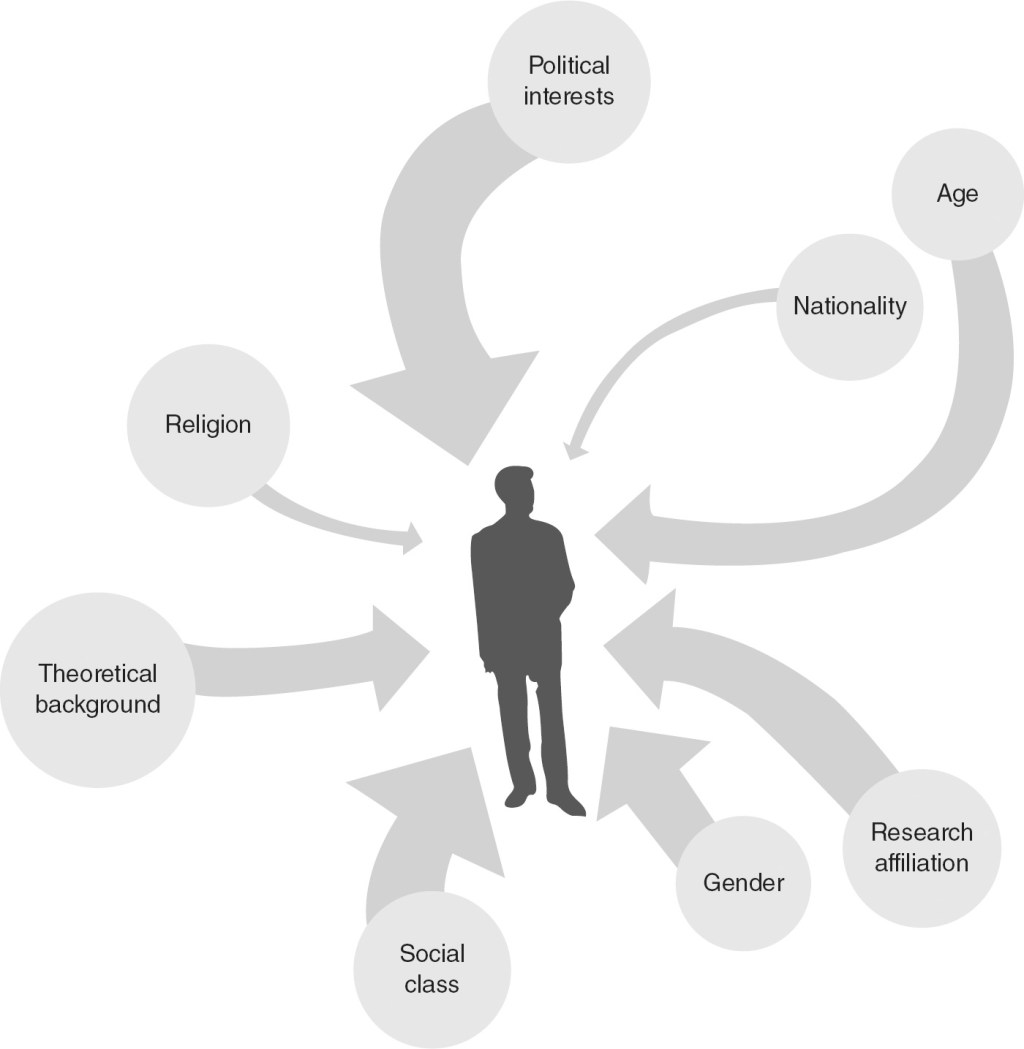
See the purpose here:
https://stephenamitchell.wordpress.com/2020/05/04/research-journal-the-first-step/
It’s a Friday night, so there will be no referencing and I’ve turned off the spell check feature. I’ll be lucky if I can understand what I was trying to say when I come back to look over this…
Over the past week, I’ve been reading, watching lectures on, and thinking about being a reflexive practitioner. On face value, it can be easy to put reflection (or critical refelction) and reflexivity in the same box – they are however different.
Being reflective is part of being a teacher; with teaching students spending hours reflecting on lessons and planning to enhance their own CPD, for example. Being reflexive is deeper and more analytical. In the papers I have read this week there are different definitions and meanings, depending on the context. In a research context, this focusses more on recognising the subjectivities which you bring to your own research methodology and being aware that all research is an intellectual interpretation. You can begin to see how it would be a bit of a nightmare addressing this fully within your research – especially where observations or conversations form the basis of your data collection.
In a literal sense, being reflexive means ‘bending backward’, so it is easy to see where the link with being reflective comes from. Alongside this definition, within research, there are three broad variations of being reflexive:
Reflexitivty, variation 1: a critical response to a given situation (“why did I do that, where did it come from?)
Reflexivity, variation 2: a critical dissection of how knowledge was generated and how relations, power, and position shape this (“what caused that situation? What influenced that decision. I know XXX, therefore, it is likely that…”)
Reflexivity, variation 3: a critical understanding of the drivers which influence knowledge acquisition (I am interested in XXX, so I will look further into this…”)
In an educational sense, I immediately think of relationships. It’s the bedrock of all good teaching. As a reflexive practitioner, Bourdieu would suggest that we need to be skeptical and challenging of our own views in order to understand and empathise with the views of others; reflexive sociology. Margaret Archer has some brilliant keynotes around this, this being one of my favourites: https://www.youtube.com/watch?v=PRBZCxNguGc&t=428s
It links to identity and what we value, and why. Bourdieu would say that we, as researchers and learners, need to realise that everyone is doing this in society. For me to understand it, a useful metaphor is that we, as researchers, are fish in a bowl undertaking active research in our own environment which we engage with an have a relationship with. It is possible to give an unbiased, non-opinion driven account of findings? Probably not.
In school leadership, it is imperative to know how your positionality brings certain unconscious biases – your ‘baggage’. The difficult part is actually identifying what these are. The easy part is doing something about it. A blog online would be an inappropriate place to share what I consider my biases are, but in essence, this is where I see reflexivity sitting in educational leadership.
As an aside to this, I also see reflexivity as providing a mechanism for dissecting decision making – along the lines of ‘black box thinking’. As I type that sentence, I realise that this is actually more along the lines of a critical reflection, as opposed to reflexive thinking. These are pretty interchangeable.
See, I’ve confused myself already…




 Stephen Mitchell
Leave a comment