- Is thinking a ‘higher-order’ activity?
- Is thinking a ‘skills’ that can be taught and learnt?
- Can it be broken down into progressional steps that can be taught?
- Is thinking context-dependent?
- What influences our thinking?
- Is it possible to develop ‘thinking-centred learning and if so how?
To start this blog, I want to define my understanding of higher order thinking. As someone who works in education, my definition is obviously going to contain some information around Bloom’s taxonomy; a series of building blocks to encourage and develop higher order thinking. These strands build from lower level cognitive skills to more complex and and challenging cognitive processes; requiring the learners to process information from short to long-term memory several times, thus building schema and a strong understanding of the taught ideology. Linking, in someways to constructivist theory.
When we then consider the act of thinking and where this would sit on the taxonomy, you are required to define what ’thinking’ really means. For me, when I consider thinking, I also consider ‘reasoning’. If I carry this idea forward, reasoning, in my opinion, would sit on the taxonomy at application level: critical thinking. However, it should of course be argued that all thinking is reasoning, and as such, all thinking is a higher order activity.
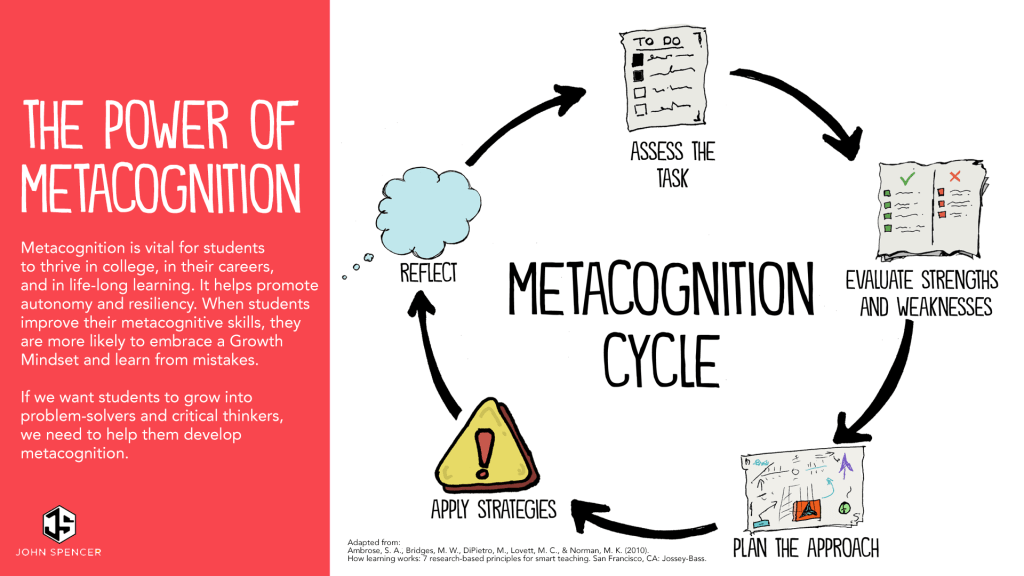
Can you learn to think? Can it be broken down into a simple list (reductionist theory)? In short, this depends on your definition of thinking. If you associate it with learning, then of course it can be – metacognitive theory providing a positivist’s paradise. Can it be broken down into progressive steps which can be taught, I don’t believe so – it is a journey very much dependent on the individual and their ability to reflect upon their own learning. Of course, thats not to say that one cannot learn supportive strategies along the way.
So, in short – can we teach critical thinking? Yes, but with certain limitations. Even within a single domain critical thinking is a complex, higher-order skill that is hard to learn and even harder to transfer across domains (see: https://www.learningscientists.org/blog/2019/2/28/can-we-teach-critical-thinking)
What influences our thinking? (see https://www.sciencedaily.com/releases/2015/02/150203142309.htm – our thoughts are susceptible to external influence, even against our will). The world around us, of course provides influence to our thoughts – subconsciously and consciously. This in turn supports our interests which impacts our thinking and perception of the world around us. The way we inherently view or interpret data also supports us in drawing influences and connecting schema from new and previous knowledge.
Is it possible to develop ‘thinking-centred learning and if so how?
Is this about curriculum design? The way in which we expect and train our students to engage with the knowledge as stipulated in the curriculum? Encouraging children to enngage their learning in taxonomies, such as Blooms could support this. It is possible – metacognition.



 Stephen Mitchell