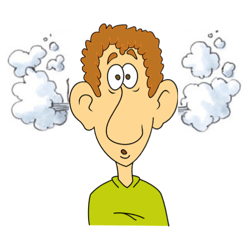
Sometimes, if you write it then you pick it apart a bit. As such, here is my own attempt at trying to pick apart my own thinking around this subject area.
In considering my own epistemology and ontological assumptions, separating the two can be a challenge. I believe that the bridge between both terms to be strong; one cannot exist without the other and in-turn they directly support, develop and challenge each other; a form of reconstruction through knowledge acquisition. I consider myself flexible of thought; a creative by definition.
I would describe myself as a professional educator. It is my belief that knowledge can be categorised as either biologically primary (naturally learnt through the environment) or biologically secondary (explicitly taught and unlearnt without direct instruction). To arrive at this belief, great understanding of cognitive capabilities and processes has been developed. This has been achieved through observations and practical experiences in a bid to understand the relationship between a learner and their environment; trying to see the world from their point of view. How do they perceive the world? How do they interpret it and subsequently learn? It will come therefore as no surprise that I lean towards the generalised assumptions of an interpretivist.
Considering and applying the spectrum of philosophical standpoints on my perspective of science, I have had to challenge my own ontological and epistemological assumptions through writing this blog. I refer to science as a general term and do not speak to any one specific branch of it. As a non-scientist (and therefore, a non expert), I am of the belief that science and philosophy are continually moving feats; vast subjects which require a broad range of cumulative learning to further develop and therefore contribute towards. When I first started exploring this subject area, I initially aligned my thinking towards that of a positivist. More specifically, and somewhat embarrassingly, that of a logical positivist. To me, as a non-expert, the concept of ‘right or wrong’, ‘true or false’ proved to be a simplified and superficial way to explore the complex subject nature of science. This opposes many of the values from which I underpin my view of existence, not taking into account any form of socio-cultural limitations, for example.
Through deeper reflection, and in recognising the sheer scope of the subject matter, I can now draw a parity with my previously mentioned ontological and epistemological assumptions: it is possible that the paradigms in which science operates can, and should, be challenged and changed dependent on new findings. As such, newer theories and understanding can often invalidate previously developed theories. Creativity of thought is therefore required.
Furthermore, perception and viewpoints of science can be altered by internal and external factors: the importance given by an individual to the subject. For a non-expert, science is not hugely important to me. Until, of course, it is. As an adult, I know that I will, at some point, require medical intervention (as a high percentage of the world does). At the point of considering this, I believe fully in a rule-based positivist approach; because it forms the basis of the methodological framework used to qualify this as a, hypothetical, suitable intervention. Although it goes against my interpretivist view, it is a comforting ontological assumption in a time of crisis; albeit not how I view the world on a day-to-day basis.
To conclude, I believe that my ontological and epistemological assumptions can be challenged depending on the domain in which I am working. At this point, I remain flexible of thought; but inherently interpretivist.

 Stephen Mitchell