As always, this is more about my own personal note taking and not a blog for other to read.
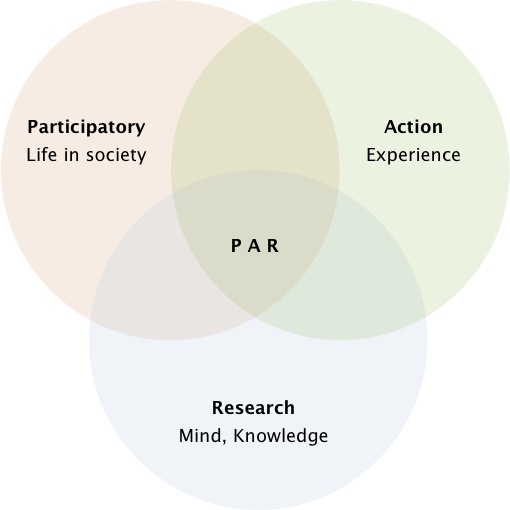
Today, I’ve been having a read of: Chapter 3 in Tracy (2020) (pages 67 – 69) who looks at a body of qualitative methods, including that of participatory action research. I’m currently considering the use of co-researchers to support the answering of my question so it may well be something which is worth further consideration as this process continues.
Tracy defines participatory action research as research where the researcher works with participants to help them address, understanding or improve local issues or dilemmas. In a sense, my current EdD proposal could meet that definition in that it is supporting the children/teachers in narrowing the oracy gap over time.
As this is action research, it follows the cyclical: plan, do review. Tracy believes that this form of research is best suited to those who are undertaking a phronetic (problem based) approach to research and for those who wish to understand and promote transformation (Mertens, 2007).
Tracy believes that most research has the capacity in which to involve a form of participation, such as:
1, asking participants about current dilemmas and shaping research to help shed light on these issues;
2, Incorporating participants’ voices;
3, Presenting research findings back to participants as to ensure it produces knowledge which is directly useful and therefore used.
In considering my own research question, it is possible to include both children, parents and teachers as co-researchers. However, I can deduce the following:
- children cannot be deemed as experts in the field I am researching. I will however capture their voices to understand their interpretation of the intervention as they are the most important stakeholder involved in the project.
- parents as co-researchers is a strong tool, however, I am also aware that I don’t want to generate data I cannot use. Too much information that leads to no conclusions is a real concern for me in this study. Again, I will run a focus group to understand the collective barriers to ’talk’ when outside of the classroom.
- teaching staff will be used, through ethnography, to capture both observations and – afterwards – opinions through an interview linked to each child who is a case study. This is where I hope to generate the more ‘useful’ data. They will bridge pedagogy and experience to support a shared understanding of areas to improve practice… I hope!
Food for though… as always!


 Stephen Mitchell
Leave a comment