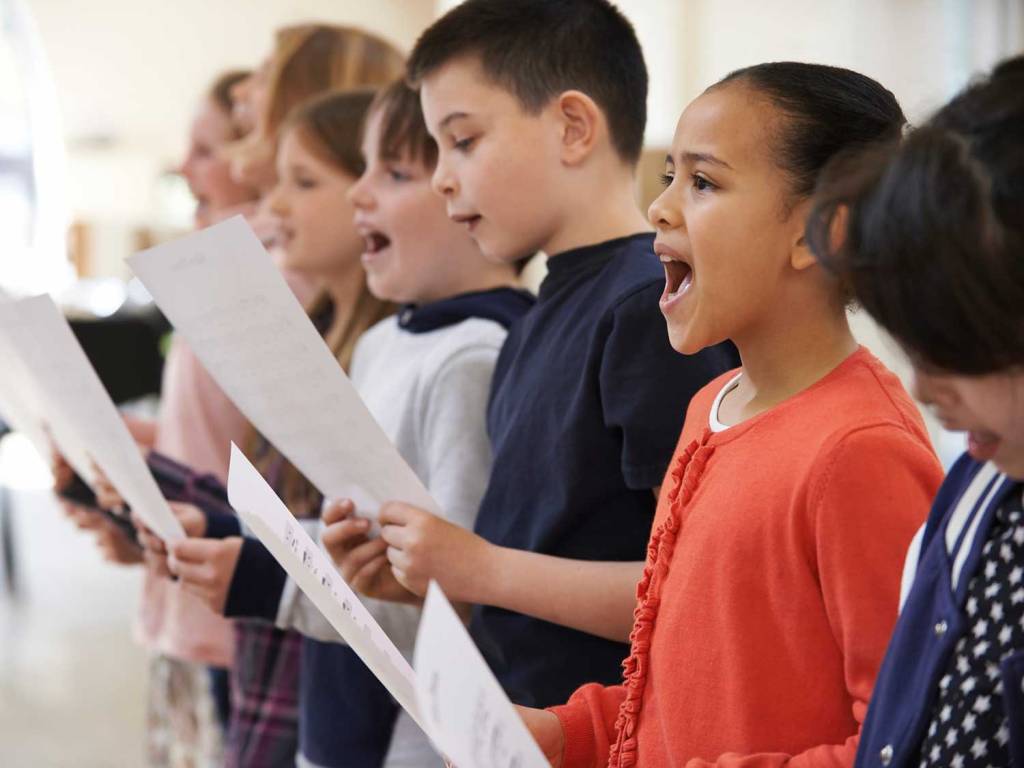
There is a moment that occurs in almost every classroom, almost every day, and yet it is so familiar that we rarely stop to think about it.
A teacher poses a question to the class.
Perhaps it is about the motives of a character in a story, the most efficient method for solving a mathematical problem or the causes of the Great Fire of London. The question itself is rarely the issue. It is what follows that has increasingly captured my attention.
The room falls silent.
A handful of children immediately raise their hands, while others avoid eye contact with remarkable determination. Some begin to shuffle papers that no longer require shuffling. Others glance towards classmates, hoping someone else will answer first. The teacher waits for a few seconds before offering reassurance that there are “no wrong answers”, before eventually selecting a pupil to respond.
It is such a routine part of classroom life that few of us would consider it unusual. Yet I have begun to wonder whether there is something rather curious about what we are asking children to do.
In almost every other aspect of life, we recognise the importance of rehearsal.
Actors do not step onto a stage without weeks of preparation. Musicians do not perform a recital having played the piece only once. Athletes spend countless hours practising movements that spectators will witness for only a matter of seconds. Even outside the performing arts and sport, most of us quietly rehearse important conversations before we have them. We mentally prepare for job interviews, presentations, difficult telephone calls and speeches at family celebrations. We understand instinctively that confidence is not simply a product of talent; it grows through repeated opportunities to practise before the performance itself.
Yet in classrooms we often reverse that sequence.
We ask children to perform first.
The expectation is rarely explicit, but it is embedded within the rhythms of school life. A question is asked and children are expected to formulate an answer, organise their thinking, decide whether it is accurate, judge whether it is worth sharing and then articulate it publicly, often within the space of only a few seconds. For some children this process appears effortless. For others it represents an extraordinary cognitive and emotional demand.
When a child hesitates, our instinct is often to interpret that hesitation as uncertainty or a lack of confidence. Occasionally, it may be. Just as often, however, it may simply reflect the complexity of the task we have set.
To answer a question publicly is not merely an intellectual exercise. It requires children to make themselves visible. They are exposing not only what they know, but also the possibility that they may be wrong. In a classroom community, where social relationships matter enormously, that carries a degree of risk that adults sometimes underestimate.
The longer I have spent in schools, the more I have realised that the children who appear most confident are not necessarily those who know the most. They are often those who have become comfortable with the possibility of imperfection. They have learned that offering an incomplete answer is not a source of embarrassment but an ordinary part of learning. That understanding does not emerge by accident. It develops slowly through repeated experiences of psychological safety.
Perhaps this is why I have become increasingly interested in rehearsal, not as something reserved for performances or productions, but as an ordinary part of classroom learning.
Before asking children to share an idea with thirty classmates, what opportunities have they had to test that idea? Have they spoken it aloud to a partner? Have they explored it through discussion or role? Have they had time simply to sit with the question before being expected to answer it? These moments are often viewed as preparation for the “real” learning, yet I have come to suspect that they are the learning. They are the spaces in which children begin to organise their thoughts, discover what they believe and develop the confidence to express it publicly.
Drama has reinforced this belief for me more than any other aspect of my teaching.
During a rehearsal, nobody expects perfection. Children are encouraged to experiment with different interpretations, to pause, to start again and to discover possibilities they had not previously considered. The emphasis is not upon getting it right immediately but upon exploring together. It is striking how often children who appear hesitant in formal classroom discussion become thoughtful, articulate contributors when they are given permission to rehearse ideas through imagined situations before sharing them more widely.
Increasingly, I wonder whether this principle extends far beyond drama.
Perhaps rehearsal is not an optional extra that supports learning. Perhaps it is one of the conditions that makes learning possible.
This is not an argument against questioning, nor is it a suggestion that children should never be challenged to think on their feet. Those moments have an important place within education. Rather, it is an invitation to reflect on the sequence we have become accustomed to. If we consistently ask children to perform before they have had the opportunity to rehearse, we should not be surprised when some choose silence over uncertainty.
When we reverse that sequence, something rather different begins to happen.
Children speak with greater clarity because they have already found the words.
They contribute more willingly because the first attempt has already happened in a smaller, safer space.
Most importantly, they begin to see communication not as a test of what they know, but as a process through which their thinking continues to develop.
Perhaps the classrooms that appear most confident are not those in which children are expected to perform immediately.
Perhaps they are the classrooms in which performance is rarely the first step.



Leave a Reply