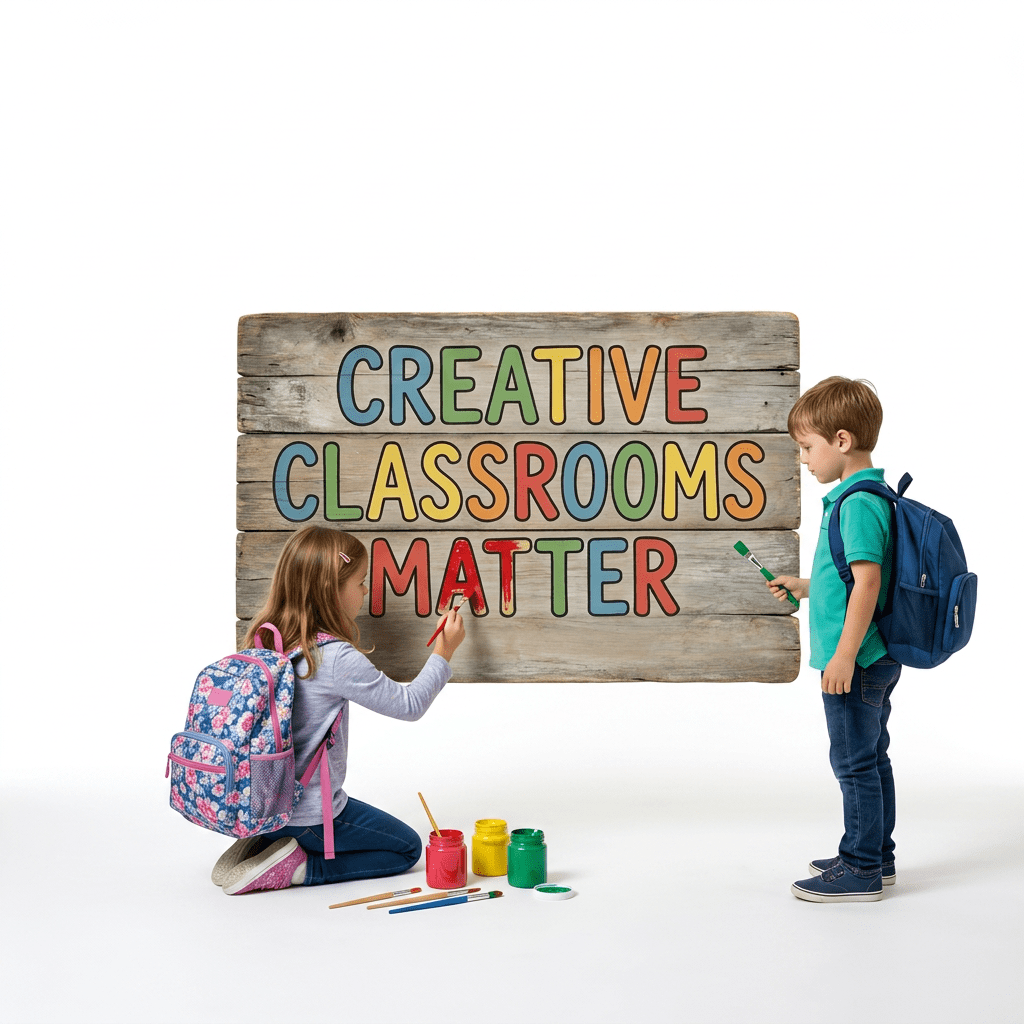
There is a particular kind of silence that exists in some classrooms.
It is not always obvious at first. The children are compliant… the books are neat.. hands occasionally go up (I hate this!). The room appears calm and purposeful. Yet, underneath the surface – something feels absent. Curiosity becomes cautious, risk-taking disappears, children begin searching for the “correct” answer before they have fully formed a thought of their own.
Over time, classrooms can become places where performance replaces participation.
This is not the fault of teachers. Most teachers care deeply about children thinking, imagining and expressing themselves. The difficulty is that schools now operate within systems that increasingly reward certainty, speed and (sadly) measurable outcomes. Creativity, meanwhile, is often treated as something softer: enrichment rather than infrastructure. Valuable, perhaps, but ultimately secondary.
The problem is that creativity is not an optional extra within education. It is one of the ways children make sense of themselves and the world around them.
When creative opportunities narrow, participation narrows too.
In many schools, particularly those working under intense accountability pressures, the curriculum can gradually become dominated by retrieval and visible performance. There is understandable logic behind this… schools want children to succeed and knowledge matters enormously. But when every learning experience becomes tightly controlled and outcome-driven, something important can begin to disappear: space for uncertainty.
To become embedded, creativity requires uncertainty. It requires children to speculate before they know the answer and to rehearse ideas aloud. This is not a distraction from learning. In many ways, it is the mechanism through which deeper learning happens.
This becomes particularly significant when we think about communication.
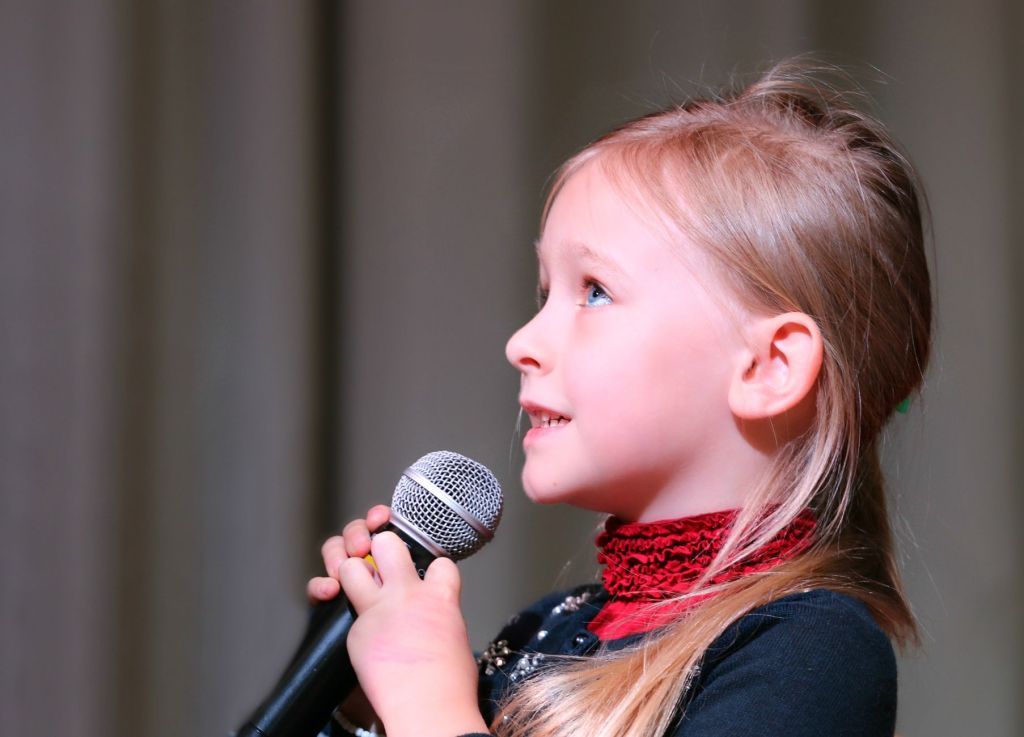
Schools often speak about wanting children to “find their voice”, yet many classroom structures unintentionally privilege children who are already comfortable speaking quickly, confidently and publicly. The children who pause, hesitate, rehearse internally or communicate more physically can easily become invisible within highly performative classroom cultures.
During my doctoral research, I found that some children need time before speech; some need movement before language; and some need fictional distance before they feel safe enough to contribute authentically.
This is one of the reasons drama remains so powerful within education. Not because it creates performers, but because it creates conditions for participation. Through role, embodiment, rehearsal and collective creation, children can experiment with expression without the same fear of being personally wrong.
A child speaking as a character is often braver than a child speaking as themselves.
Importantly, creativity also changes the social dynamics of classrooms. In highly convergent learning environments, children are often rewarded for arriving at answers efficiently. In creative spaces, however, value can emerge through interpretation, collaboration and perspective. Different children suddenly become socially significant. The child who struggles with rapid written recording may become the child with the most compelling idea for a scene. The quieter pupil may shape the emotional direction of a discussion through observation rather than volume.
Creativity broadens what competence can look like.
This matters because education is not simply about producing outcomes. It is about shaping identities. Children gradually construct beliefs about themselves through the experiences schools repeatedly provide. A child who continually experiences school as a place where there is little room for imagination may begin to internalise that their ideas hold little value unless they are immediately correct.
That is a dangerous message for education to send.
The irony, of course, is that the wider world increasingly values precisely the capacities schools sometimes squeeze out: collaboration, adaptability, communication, creativity and innovation. We speak constantly about preparing children for an unpredictable future, while often narrowing the very experiences that help human beings navigate uncertainty.
Creativity should not sit at the edges of school life, reserved for productions, enrichment weeks or occasional art projects. It should exist within the daily architecture of classrooms: within discussion, storytelling, inquiry, role-play, debate, writing and collective thinking.
Not because every child will become an artist.
But because every child deserves opportunities to imagine and be heard.
When schools narrow creativity, they do not simply narrow the curriculum. They inadvertently narrow the possible ways children can belong within it.



Leave a Reply